Key Takeaways
- In TCM, headaches are usually caused by Qi and Blood stagnation in the head, rising Liver Yang, or external Wind-Cold invading the upper body — acupressure works by moving Qi, clearing stagnation, and drawing energy down.
- Seven points cover nearly every common headache: Hegu (LI4), Taiyang, Yintang, Fengchi (GB20), Baihui (GV20), Zanzhu (BL2), and Yingxiang (LI20).
- Different points suit different headaches — tension (Hegu, Fengchi, Baihui), migraine (Fengchi, Hegu, Taiyang), and sinus (Yingxiang, Zanzhu, Yintang).
- Press each point for 1 to 2 minutes with firm, steady pressure at the first sign of pain for the best results.
- Pregnancy Warning: Do not press Hegu (LI4) during pregnancy — it can stimulate uterine contractions. See the safety section below.
1. How TCM Understands Headaches
Headaches are one of the most common complaints in both modern and traditional medicine, and Traditional Chinese Medicine has been treating them for over two thousand years with a surprisingly precise framework. In the TCM view, the head is the meeting place of all Yang meridians and is nourished by clear Yang energy rising from the body. A headache develops when this normal upward flow is disrupted — either because too much energy and heat rush upward and become trapped in the head, or because the flow of Qi and Blood is blocked somewhere along the way.
TCM identifies several main patterns behind headaches. The first is Liver Yang rising, which produces the throbbing, one-sided pain we recognize as migraine — often triggered by stress, frustration, or anger that causes Liver Qi to stagnate and transform into rising heat. The second is Qi and Blood stagnation, the dull, tight, band-like pain of a tension headache caused by tight neck and shoulder muscles restricting circulation to the head. The third is external Wind-Cold or Wind-Heat invading the head, which often accompanies a cold and produces sinus congestion, forehead pressure, and aching. A fourth pattern, Phlegm-Damp obstructing the head, produces a heavy, foggy, "wrapped in a bandage" sensation common in chronic sinus headaches.
Acupressure addresses all of these patterns through a single principle: restore the free flow of Qi and Blood. By pressing specific points, you unblock stagnation, draw excess heat and energy down from the head, open the channels that connect the neck to the skull, and release the muscle tension that often generates pain in the first place. Modern research has found that acupressure can reduce headache frequency, intensity, and duration — often within minutes for tension headaches and over several weeks of preventive practice for migraines. The key is matching the right point to the right type of headache and pressing early, before pain fully takes hold.
2. The Basic Technique for Headache Relief
Before learning the individual points, understand the basic method that applies to all of them. Doing it correctly makes a real difference in how quickly relief arrives.
Pressure and Contact
Use the pad of your thumb or the tip of your index finger to press each point. Apply firm but tolerable pressure — enough to feel a dull ache or a slight radiating sensation, but never sharp pain. In TCM this sensation is called Deqi, and it signals the point is activated and Qi is beginning to move. Tenderness at a point usually indicates stagnation that needs clearing, so do not shy away from a "good hurt."
Duration and Breathing
Hold each point for 1 to 2 minutes, or about 20 to 40 slow breaths. Breathe deeply and evenly through the nose, letting the exhale be longer than the inhale. This extended exhale calms the nervous system and amplifies the pain-relieving effect. If a point feels very tender, you can press in short cycles — 30 seconds on, a few seconds off — and repeat.
Timing
For an active headache, press the relevant points as early as possible — at the very first twinge or aura. Acupressure is far more effective at stopping a headache that is building than one that is fully established. For prevention, press your core points once or twice daily for a few minutes, especially during high-stress periods or weather changes that tend to trigger your headaches.
What You Will Feel
As you work the points, you may notice warmth spreading, a pulsing under your finger, a softening of the tight muscles in your neck and jaw, or a gradual dimming of the pain. Some people feel relief almost immediately for tension headaches; migraines tend to respond more slowly and benefit from repeated pressing. Even if the pain does not vanish completely, it often drops from unbearable to manageable — enough to function and rest.
3. Point 1: Hegu (LI4) — The "Joining Valley"
Hegu is the most famous pain-relief point in all of Chinese medicine and the single most useful point for headaches of any kind. Its name means "Joining Valley," and it sits on the Large Intestine meridian, which runs up the arm and across the face to the opposite side of the head.
Hegu (LI4) is a strictly contraindicated point during pregnancy. It is well documented in TCM to stimulate uterine contractions and has been used historically to induce labor. Never press LI4 if you are pregnant. If you are pregnant and have a headache, use Yintang and Yingxiang instead, and consult your obstetrician or a qualified TCM practitioner.
Location
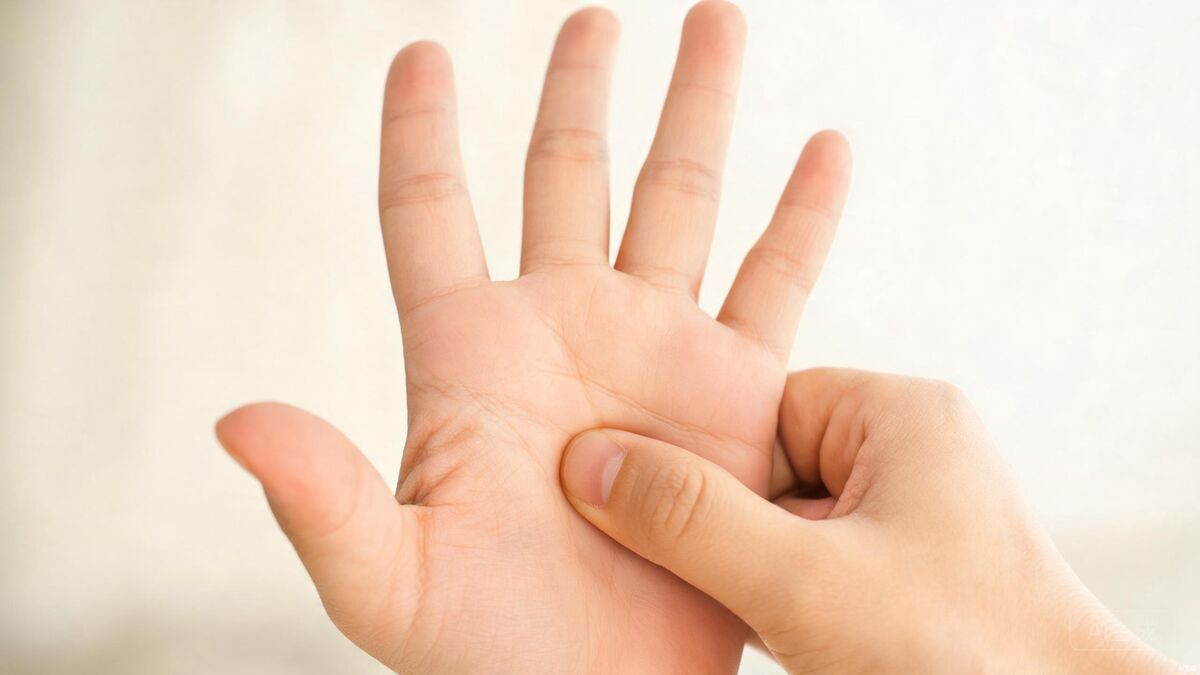
Hegu (LI4) is located on the back of the hand, in the fleshy web between the thumb and index finger. More precisely, it sits at the highest point of the muscle bulge that rises when you press your thumb and index finger together.
How to Find It
Hold one hand with the thumb and index finger pressed together. A muscle bulge appears on the back of the hand between the two fingers. The point is at the top of that bulge, halfway along the bone that connects the thumb to the wrist. Press firmly — when you find it, the spot is usually quite tender.
How to Press
Use the thumb of your opposite hand to press into the point, angling slightly toward the index finger bone. Apply firm pressure for 1 to 2 minutes on each hand. You can massage in small circles or hold steady. Most people feel a strong, dull ache that may radiate up the arm — this is exactly right.
What It Does
Hegu is the master point for the head and face. It moves Qi and Blood, clears heat, and relieves pain throughout the upper body. It is the first point to reach for in almost any headache — tension, migraine, or sinus. In TCM theory it is particularly effective for frontal headaches and pain in the face, jaw, and teeth. Because the Large Intestine meridian travels to the opposite side of the head, pressing Hegu on the right hand often helps a left-sided headache and vice versa, though you can press both hands for full effect.
4. Point 2: Taiyang (The "Sun" Point)
Taiyang, meaning "Supreme Yang" or simply "Sun," is an extra point located at the temple. Its name refers to the depression that catches sunlight, and it is the most direct point for temporal and migraine pain.
Location
Taiyang is located in the temple depression, about one finger-width outward from the outer end of the eyebrow, in the soft hollow between the eyebrow and the hairline.
How to Find It
Place your index or middle finger at the outer tip of your eyebrow. Slide it straight back toward your ear about one finger-width. You will feel a small, tender depression in the temple muscle — that is Taiyang.
How to Press
Use the pads of your index or middle fingers to press both temples simultaneously with gentle to moderate pressure. Do not press hard — the temple area is sensitive and home to superficial blood vessels. Hold for 1 to 2 minutes, or use slow, small circles. Breathing deeply while pressing both sides has a soothing, bilateral effect that calms throbbing pain.
What It Does
Taiyang relieves temporal headaches, eases throbbing migraine pain, and clears Wind-Heat from the head. It is the go-to point for one-sided, pulsing headaches centered at the temples, and it works especially well when paired with Hegu. Because it sits directly on the temporalis muscle, pressing it also releases jaw tension that frequently accompanies stress-related headaches and teeth grinding.
5. Point 3: Yintang (The "Hall of Impression")
Yintang is the "third eye" point between the eyebrows. While best known for calming the mind and aiding sleep, it is also a powerful point for frontal headaches and sinus pressure.
Location
Yintang is located midway between the inner ends of the eyebrows, in the small depression at the top of the bridge of the nose.
How to Find It
Bring your index or middle finger to the bridge of your nose and slide it gently upward until you reach the natural dip between the eyebrows. That hollow is Yintang.
How to Press
Using the pad of your index or middle finger, press straight inward toward the back of your head with steady, moderate pressure. Hold for 1 to 2 minutes while breathing slowly. A gentle circular motion also works well for sinus congestion.
What It Does
Yintang relieves frontal headaches, clears the sinuses, and calms the Shen (spirit-mind). It is the best point for the dull, pressing pain across the forehead that often comes with eye strain, stress, or sinus inflammation. Because it also soothes the nervous system, it is ideal for tension headaches that build during a long day of screen work or worry. Press Yintang whenever the pain feels concentrated behind the forehead or between the eyes.
6. Point 4: Fengchi (GB20) — The "Wind Pool"
Fengchi, meaning "Wind Pool," is one of the most important points on the Gallbladder meridian and a cornerstone of headache and neck-pain treatment. Its name refers to the pool-like depression at the base of the skull where "Wind" — the external pathogen TCM blames for many headaches — is said to enter and lodge.
Location
Fengchi (GB20) is located at the base of the skull, in the two hollows on either side of the neck, where the skull meets the top of the neck muscles. It sits in the depression between the two vertical neck muscles (the sternocleidomastoid and trapezius).
How to Find It
Tilt your head slightly forward. Place both thumbs at the back of your neck, just under the base of the skull. Slide them outward until they settle into the natural hollows on either side of the thick neck muscles. The points are usually tender, and you may feel an ache radiate up toward the head when you press correctly.
How to Press
Use both thumbs to press inward and slightly upward toward the skull. Apply moderate pressure for 1 to 2 minutes. You can also use a gentle circular motion. An alternative is to interlock your fingers behind your head and let your thumbs do the work while your head relaxes back into your hands — this also stretches the neck and amplifies relief.
What It Does
Fengchi releases neck and head tension, expels Wind from the head, and is one of the most effective points for migraines and occipital headaches (pain at the back of the head). It is invaluable for headaches that start at the base of the skull and wrap around the side of the head, and for pain triggered by stiff neck, poor posture, or cold drafts. Because the Gallbladder meridian travels along the sides of the head, Fengchi is particularly suited to one-sided, temporal migraines. For many sufferers, this single point does more than any other.
7. Point 5: Baihui (GV20) — The "Hundred Meetings"
Baihui, meaning "Hundred Meetings," sits at the very crown of the head. It is the point where all Yang meridians converge, and it is used to lift energy, calm the mind, and regulate pain across the entire head.
Location
Baihui (GV20) is located at the top center of the head, on the midline, roughly at the point where a line drawn from the tops of both ears would intersect.
How to Find It
Place one ear against your shoulder and imagine a line going straight up from the top of your ear opening over the crown. Do the same from the other ear. Where the two lines meet at the top center of your head is Baihui. You can often feel a slight soft spot or depression there.
How to Press
Use your index or middle finger to press straight down onto the point with moderate pressure. Hold for 1 to 2 minutes. Alternatively, tap the point lightly and rapidly with your fingertip for 30 to 60 seconds to "lift" energy, or press firmly to calm and ground. Choose the method based on what your head responds to.
What It Does
Baihui regulates the flow of Qi across all Yang meridians, calms the mind, and relieves headaches that feel heavy, foggy, or spread across the whole head. It is especially useful for tension headaches that feel like a tight band squeezing the skull, and for headaches accompanied by dizziness, mental fog, or fatigue. Because it governs the whole head, Baihui is an excellent "catch-all" point to add to any headache routine.
8. Point 6: Zanzhu (BL2) — The "Gathered Bamboo"
Zanzhu, meaning "Gathered Bamboo," sits at the inner end of the eyebrow and is the primary point for frontal and sinus headaches centered around the eyes and brow.
Location
Zanzhu (BL2) is located in the small depression at the inner end of the eyebrow, just above the inner corner of the eye, on the edge of the eye socket bone.
How to Find It
Place your index finger at the inner corner of your eye, where the nose meets the brow. Slide it slightly up into the notch at the inner end of the eyebrow, right on the bone of the eye socket. The point is usually sensitive when pressed.
How to Press
Use your thumbs or index fingers to press gently upward into the notches on both sides. Apply light to moderate pressure for 1 to 2 minutes. Be careful not to press into the eye itself. Slow, small circles work well here, especially for sinus pressure.
What It Does
Zanzhu relieves frontal headaches, brow pain, eye strain, and sinus congestion. It is the best point for the deep, aching pain that settles behind the eyebrows after hours of reading or screen time, and for sinus headaches that press down on the eyes. It also clears Wind-Heat, making it useful for headache accompanied by a cold or allergy flare-up.
9. Point 7: Yingxiang (LI20) — The "Welcome Fragrance"
Yingxiang, meaning "Welcome Fragrance," sits beside the nostril and is the master point for sinus congestion and sinus headaches. If your headache comes with a stuffy or runny nose, this is your point.
Location
Yingxiang (LI20) is located beside the nostril, in the groove that forms between the side of the nose and the cheek, level with the bottom of the nose.
How to Find It
Smile slightly to make the groove beside your nostril more visible. Place your index fingers in the furrows on either side of your nose, just outside the nostrils. The points sit right in those grooves.
How to Press
Use both index fingers to press inward and slightly upward toward the cheekbone. Apply moderate pressure for 1 to 2 minutes. You can also press and release rhythmically or use small circles. Many people feel the sinuses begin to open within a minute of pressing.
What It Does
Yingxiang opens the nasal passages, clears sinus congestion, and relieves sinus headaches. It is the single most effective point for the heavy, pressing facial pain that accompanies allergies, colds, and chronic sinusitis. Combined with Zanzhu and Yintang, it forms a powerful trio for any headache rooted in sinus inflammation. Press these three together when your headache centers in the face and comes with congestion.
10. Which Points for Which Headache?
Different headaches respond to different points. Use this quick guide to choose the right combination the moment pain begins.
| Headache Type | Best Points | Press For | Notes |
|---|---|---|---|
| Tension headache (tight band, neck ache) | Hegu (LI4), Fengchi (GB20), Baihui (GV20) | 1–2 min each | Start with Fengchi to release the neck, then Hegu and Baihui. Best for stress-related pain. |
| Migraine (throbbing, one-sided) | Fengchi (GB20), Hegu (LI4), Taiyang | 1–2 min each | Press at the first aura or warning sign. Use opposite-side Hegu for one-sided pain. |
| Sinus headache (facial pressure, congestion) | Yingxiang (LI20), Zanzhu (BL2), Yintang | 1–2 min each | Press all three together to open the sinuses. Add a warm compress for faster relief. |
| Frontal headache (across the forehead) | Yintang, Zanzhu (BL2), Hegu (LI4) | 1–2 min each | Great for eye-strain and screen-related pain. Rest the eyes afterward. |
| Occipital headache (back of head) | Fengchi (GB20), Baihui (GV20) | 1–2 min each | Often from neck stiffness. Stretch the neck gently after pressing. |
A few tips that improve results:
- Press early. The sooner you press after a headache begins, the more likely you are to stop it. Keep a mental note of your first-warning signs.
- Combine opposite sides. For one-sided migraines, pressing Hegu on the opposite hand often works faster than the same side.
- Drink warm water. A glass of warm water after pressing helps move Qi and clear the channels, especially for migraines triggered by dehydration.
- Rest the eyes. For screen-related headaches, close your eyes and rest them for five minutes after pressing Yintang and Zanzhu.
- Track your triggers. Note what brings on your headaches — stress, weather, food, sleep loss — so you can press preventively before pain peaks.
11. Combining Acupressure with Other TCM Headache Remedies
Acupressure is most effective as part of an integrated approach. A few compatible TCM practices can multiply its effect and help prevent headaches from returning.
Drink a Headache-Soothing Tea
For migraines linked to Liver Yang rising, a tea of chrysanthemum flowers (Ju Hua) is a classic remedy — it clears Liver heat and calms rising Yang. Chrysanthemum tea is mild, pleasant, and pairs perfectly with acupressure during a headache. For tension headaches, peppermint tea relaxes the neck and moves stagnant Qi. Sip warm, not hot, and avoid caffeine during a migraine attack.
Apply a Warm or Cool Compress
For sinus headaches, a warm compress across the forehead and sinuses opens the channels and complements Yingxiang and Zanzhu. For migraines, some people prefer a cool compress at Fengchi and the temples to reduce throbbing heat. Listen to your body — it usually tells you which temperature it needs.
Try Gua Sha on the Neck
If your headaches come from neck and shoulder tension, gentle gua sha on the neck before pressing Fengchi can release stubborn muscle knots that feed headaches. Use light strokes downward along the neck muscles with a smooth-edged tool and a little oil. Follow with Fengchi acupressure for a powerful combination.
12. Safety and Precautions
Acupressure is safe for most people, but headaches can sometimes signal a serious problem. Read this section carefully before you begin.
Hegu (LI4) must never be pressed during pregnancy. It is well documented to stimulate uterine contractions. Several other points — including those on the lower abdomen and sacrum — should also be avoided. If you are pregnant, limit acupressure to Yintang, Yingxiang, and Zanzhu, and consult your obstetrician or a qualified TCM practitioner before doing more.
When to Seek Immediate Medical Care
Acupressure is for ordinary tension, migraine, and sinus headaches. Seek emergency care if a headache: comes on suddenly and severely (a "thunderclap"); follows a head injury; comes with fever, stiff neck, confusion, vision loss, weakness, numbness, or trouble speaking; or is the worst headache of your life. These can be signs of stroke, meningitis, or other serious conditions that need immediate treatment — not acupressure.
General Safety Guidelines
- Never press on broken skin, wounds, bruises, scars, moles, or varicose veins. Choose a different point if the area is damaged.
- Use gentle pressure on the temples and face. The Taiyang and facial areas have superficial blood vessels; press lightly to avoid bruising.
- Do not replace medical care. If your headaches are severe, frequent, changing in pattern, or accompanied by neurological symptoms, see a doctor for proper diagnosis.
- Bleeding disorders and blood thinners. Use very light pressure and avoid points that bruise easily.
- Pressure should be "good hurt." A dull, spreading ache is correct; sharp, electric, or shooting pain means you are pressing too hard or off the point. Reduce pressure and reposition.
Frequently Asked Questions
How fast does acupressure work for headaches?
Many people feel relief within 5 to 10 minutes of pressing headache points, especially for tension headaches. For migraines, acupressure may reduce intensity within 15 to 30 minutes, but it works best as a preventive practice done daily rather than only during an attack. The single most important factor is timing: pressing points at the very first sign of a headache — a twinge, a stiff neck, an aura — yields the fastest and most reliable results. Once a migraine is fully established, acupressure can still help take the edge off, but it rarely stops the attack completely. For chronic sufferers, consistent daily pressing of core points over several weeks often reduces how often and how severe headaches become.
Which acupressure point is best for migraines?
For migraines, Fengchi (GB20) at the base of the skull and Hegu (LI4) on the hand are the two most effective points. Fengchi releases the neck and head tension that often triggers migraines, while Hegu is the classic point for head and face pain. Add Taiyang at the temples if the pain is throbbing and one-sided. For best results, press all three at the earliest warning sign, and use Hegu on the hand opposite the side of your headache. Combine the acupressure with a cup of chrysanthemum tea and a quiet, dark room.
Can I use acupressure with headache medication?
Yes. Acupressure is generally safe to use alongside over-the-counter or prescribed headache medication. It is a non-invasive, drug-free practice that does not interact with medications. Many people use acupressure to reduce how often they need painkillers, or to bridge the gap while waiting for medication to take effect. However, never stop prescribed migraine medication — especially daily preventive drugs — without consulting your doctor, as some require gradual tapering to avoid rebound headaches. Think of acupressure as a complement to your current plan, not a replacement for it.
How often should I press acupressure points for headaches?
During an active headache, press the relevant points for 1 to 2 minutes each, repeating every 20 to 30 minutes as needed until the pain eases. As prevention, press your core points (Hegu, Fengchi, and Baihui) once or twice daily for a few minutes each, especially during high-stress periods, hormonal shifts, or weather changes that tend to trigger your headaches. You can safely press most headache points daily, but give any point that becomes sore a rest day. Always avoid Hegu (LI4) if you are pregnant.
This article is for educational and informational purposes only and is not a substitute for professional medical advice, diagnosis, or treatment. The acupressure points and routines described here are traditional self-care practices and are not intended to treat, cure, or prevent any disease. Always consult a qualified healthcare provider before beginning any new wellness practice, especially if you are pregnant, nursing, taking medication, or have a medical condition. Severe, sudden, or unusual headaches can be a sign of a serious condition and require immediate medical evaluation. Never disregard professional medical advice or delay seeking it because of something you have read on this site. Read our full disclaimer →