Key Takeaways
- Tai chi is often called "moving meditation" because its slow, flowing movements combined with deep breathing activate the parasympathetic nervous system and lower cortisol.
- In TCM, stress and anxiety are understood as disturbances of the shen (spirit), often caused by liver qi stagnation and heart fire; tai chi soothes the liver, calms the heart, and settles the shen.
- Five stress-relief movements, performed slowly with attention to breath, form a complete 15 to 20 minute calming routine.
- The practice environment matters: a quiet, uncluttered space, soft natural light, and freedom from interruption deepen the meditative quality.
- Consistency, not duration, is the key; 15 minutes daily produces measurable reductions in anxiety within 4 to 8 weeks.
Tai Chi as Moving Meditation
Stress has become the background hum of modern life. The body, designed for short bursts of danger followed by long stretches of calm, instead lives in a chronic low-grade state of alarm: elevated cortisol, shallow chest breathing, tense shoulders, a mind that will not stop rehearsing the future or rehashing the past. Over time this state erodes sleep, digestion, immunity, and mood. The question is not whether to relax, but how, when the very systems meant to calm us have been trained into overdrive.
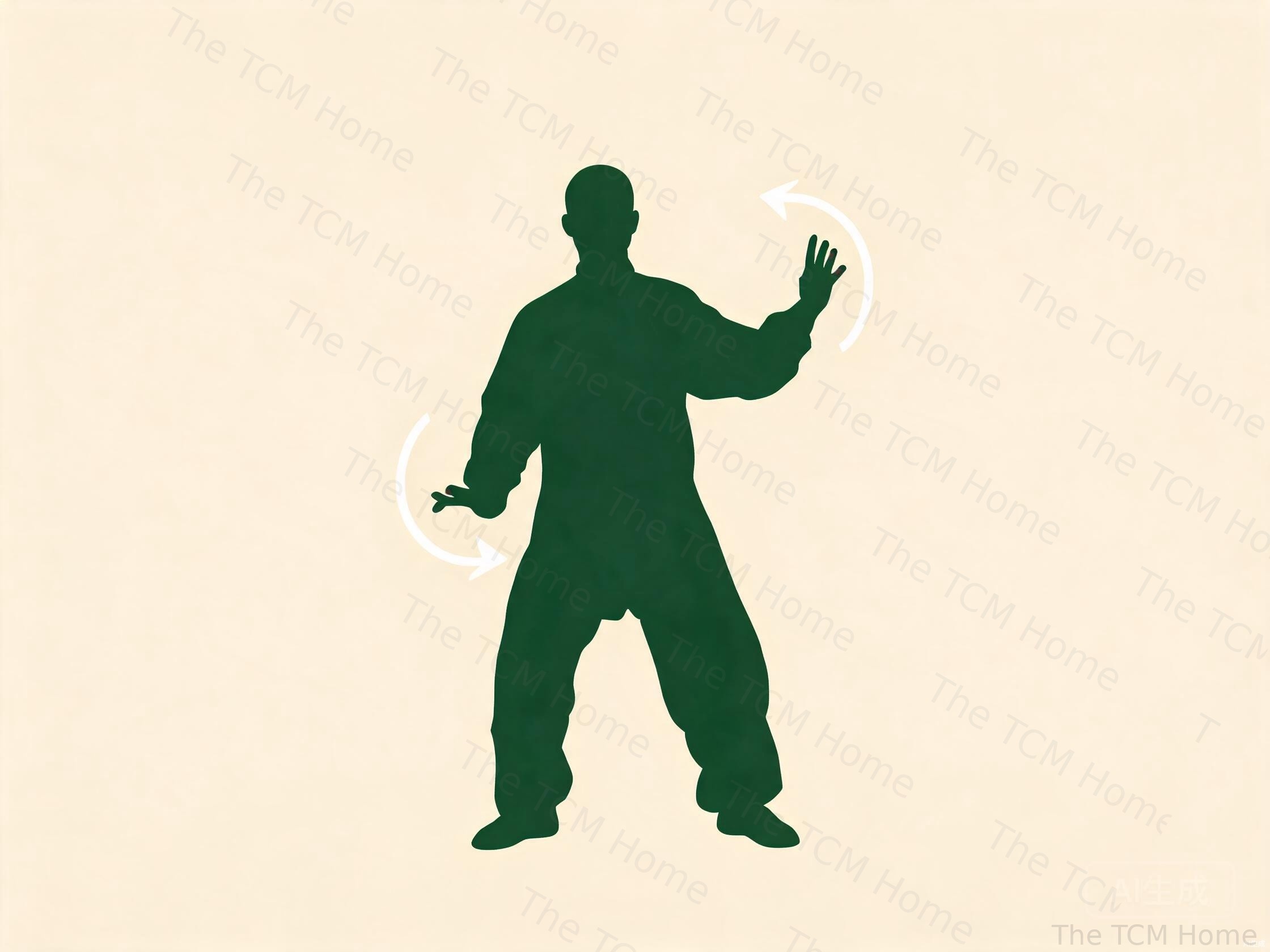
Tai chi offers an answer that is both ancient and precisely suited to this modern problem. Often described as "moving meditation," tai chi asks you to move slowly, breathe deeply, and pay close attention to what you are doing, all at once. This combination is remarkably effective at shifting the nervous system out of fight-or-flight and into rest-and-digest. The slow movement gives the anxious body something to do, which is often easier than asking an anxious mind to sit still. The deep breathing directly stimulates the vagus nerve, lowering heart rate and cortisol. And the demand for present-moment attention interrupts the rumination that feeds anxiety.
Research bears this out. Multiple randomized trials and meta-analyses have found tai chi comparable to cognitive behavioral therapy, mindfulness-based stress reduction, and standard exercise for reducing symptoms of stress and anxiety, often with fewer dropouts because the practice is gentle and enjoyable. The mechanism appears to be a combination of physiological calming, improved emotional regulation, and the cultivation of a mental state the Chinese call ru ding, "entering stillness."
The TCM View: Shen, Liver Qi, and Heart Fire
Traditional Chinese Medicine offers a complementary framework for understanding stress and anxiety. In TCM, the shen is the spirit or consciousness, housed in the heart. When the shen is calm and well-anchored, the mind is clear, sleep is easy, and emotions flow smoothly. When the shen is disturbed, there is anxiety, insomnia, restlessness, and a mind that races.
Two organ systems most commonly disturb the shen. The liver, responsible for the smooth flow of qi throughout the body, is easily affected by frustration, anger, and the chronic pressure of modern life. When liver qi stagnates, it can transform into liver fire, which rises and agitates the heart, disturbing the shen. This is why stress so often produces both physical tension (liver qi stagnation in the muscles, especially the shoulders and jaw) and mental agitation (heart fire disturbing the shen).
Tai chi addresses both. The slow, circular movements and deep waist rotation gently mobilize the liver meridian and encourage the smooth flow of liver qi, dispersing stagnation. The slow abdominal breathing, which draws energy downward into the dantian, anchors the shen and helps descending heart fire. The overall effect is a body that is looser and a mind that is quieter, the TCM definition of a calm state.
When you slow your breath to roughly six per minute, as tai chi naturally encourages, heart rate variability increases and the parasympathetic nervous system (the "rest and digest" branch) becomes dominant. This measurable physiological shift lowers blood pressure, reduces cortisol, and improves digestion, the direct opposite of the stress response. Tai chi essentially trains you to enter this state on demand.
5 Stress-Relief Movements, Step by Step
The following five movements form a complete stress-relief routine. They emphasize large, slow, circular motions that open the chest, mobilize the liver meridian along the sides of the body, and draw the attention into the breath. Practice them in a quiet space, slowly enough that each movement takes 6 to 10 seconds. Aim for a quality of softness and continuity, as if moving through warm water.
Movement 1: Commencement (Qi Shi)
The opening establishes breath and presence. It is the foundation of the calming practice.
- Stand with feet shoulder-width apart, knees softly bent, arms relaxed at the sides, palms facing the body. Let the shoulders drop away from the ears. Imagine a thread lifting the crown of the head so the spine lengthens.
- Rest the tongue gently behind the upper front teeth. Breathe through the nose, allowing the lower abdomen to expand on the inhale and soften on the exhale. Take three slow breaths to arrive fully in the body.
- Slowly raise both arms forward and upward, palms facing down, to shoulder height. Inhale through the rise, counting to six. The arms feel as if lifting through water; the shoulders stay heavy.
- Turn the palms to face downward and slowly press the arms back to the sides, exhaling for six counts. Feel the body settle, the weight sinking into the feet.
- Repeat 8 to 10 times. Keep the movement continuous, with no pause at the top or bottom. Let the breath lead the movement.
Movement 2: Opening the Chest (Kai Xiong)
This movement directly counteracts the hunched, contracted posture of stress by opening the chest and mobilizing the lung and heart meridians.
- From the commencement position, raise both hands in front of the chest, palms facing the body, elbows bent and relaxed. The hands are about shoulder-width apart.
- Inhale and slowly open the arms outward to the sides, palms turning to face forward, until they extend at shoulder height. Feel the chest broaden, the shoulder blades draw slightly together, and the breath fill the expanded ribcage. The movement is led by the back of the body opening.
- Exhale and slowly bring the hands back together in front of the chest, palms facing the body again. Feel the chest soften without collapsing.
- Repeat 8 to 12 times. Match the breath exactly to the movement: the inhale fills the opening, the exhale empties the closing.
Why it helps: Chronic stress collapses the chest and tightens the pectoral muscles, restricting breathing and signaling the brain that danger is present. Opening the chest physically releases this pattern and sends the opposite signal: safety, expansion, calm.
Movement 3: Cloud Hands (Yun Shou)
The signature flowing movement of tai chi, Cloud Hands is perhaps the most meditative single exercise in the entire art. Its continuous, circular motion entrains the mind into a flowing, undistracted state.
- Stand with feet wider than shoulder-width, toes forward, knees soft. Raise both hands in front of the chest, palms facing the body, the right hand slightly higher than the left.
- Shift weight slowly onto the right leg, turning the waist gently to the right. As you shift, the right hand circles down and across to the left while the left hand circles up and across to the right. The hands trace overlapping vertical ovals in front of the chest, like two clouds drifting past each other.
- When the weight fully reaches the right leg, step the left foot half a step to the left, placing it down with no weight.
- Shift weight onto the left leg, turning the waist to the left, continuing the hand circles so the right hand rises on the right and the left hand descends on the left.
- Continue shifting side to side, the right foot following the left with a small step every other shift, moving slowly across the floor. The hands never stop; the breath flows with them.
- Practice for 2 to 3 minutes. Let the movement become hypnotic and continuous. If the mind wanders, gently return it to the sensation of the hands circling and the feet pressing the floor.
Why it helps: The continuous, rhythmic motion of Cloud Hands gives the mind a single, absorbing focus that crowds out anxious rumination. The waist rotation gently stimulates the liver meridian along the ribcage, dispersing the qi stagnation that stress produces.
Movement 4: Pushing the Wave (Tui Lang)
A gentle weight-shifting movement with a flowing arm pattern that mimics the rhythmic advance and retreat of waves. It coordinates breath, weight, and arm motion into a single soothing rhythm.
- Stand with feet shoulder-width apart. Shift weight onto the right leg and step the left foot forward a half stride, heel touching first, into a left empty stance (90 percent weight on the right leg).
- Bring both hands to the chest, palms facing forward, as if about to push a large soft wave.
- Exhale and slowly shift weight forward onto the left leg into a bow stance (70 percent forward), pushing both hands forward and slightly down at chest height, palms facing out. The push comes from the legs and waist, not the shoulders.
- Inhale and slowly shift weight back onto the right leg, drawing the hands back to the chest, palms turning to face the body. The body retreats as the wave recedes.
- Continue the forward-and-back rhythm for 10 to 12 cycles, each lasting 8 to 10 seconds. Let it feel like breathing with the ocean.
Why it helps: The rhythmic repetition induces a mild trance state similar to walking meditation. The forward push expresses tension; the backward draw gathers calm. The coordination required fully occupies the mind.
Movement 5: Closing and Settling (Shou Shi)
The closing movement gathers the energy cultivated during practice and returns the body to stillness, sealing the calm before re-entering daily life.
- Bring the feet to shoulder-width apart, weight even. Let the arms hang at the sides.
- Slowly raise both hands, palms up, in front of the body to chest height as you inhale. Feel as if lifting a calm, warm energy from the earth.
- Turn the palms down and slowly press them to the lower abdomen (dantian) as you exhale. Feel the energy settle and store, the mind becoming quiet.
- Let the arms return to the sides. Stand still for 30 to 60 seconds, eyes soft or closed, breathing naturally. Notice the quality of stillness in the body and the quiet in the mind.
- Bow the head slightly, acknowledging the practice, then move gently into whatever comes next.
Tai chi is a wonderful support for everyday stress and mild to moderate anxiety. But if anxiety is severe, persistent, interfering with daily life, or accompanied by panic attacks, hopelessness, or thoughts of self-harm, please consult a mental health professional. Tai chi complements therapy and medication; it does not replace them for clinical anxiety disorders.
Breathing Coordination
The breath is the bridge between body and mind in tai chi, and coordinating it with movement multiplies the stress-relief effect. Three principles guide the practice:
- Breathe through the nose, into the belly. Nasal breathing filters the air and naturally slows the breath rate. Abdominal breathing, where the lower belly expands on inhale and retracts on exhale, activates the diaphragm and the vagus nerve, the main parasympathetic pathway.
- Gather on inhale, express on exhale. As a general rule, inhale during movements that gather or rise (raising the arms, stepping back, opening the chest) and exhale during movements that express or sink (pushing forward, lowering the arms, closing). This matches the body's natural breathing pattern to the movement's energy.
- Let the breath lead. If you are unsure when to inhale or exhale, let the breath set the pace and let the movement follow. A slow breath produces a slow movement, which is exactly what we want for stress relief. Never hold the breath or force it; the breath should be quiet, soft, and continuous.
Creating a Calming Practice Environment
The space in which you practice shapes the depth of the experience. A few simple choices turn an ordinary room into a sanctuary:
- Choose quiet. Practice where you will not be interrupted. Silence the phone. If complete silence is impossible, soft instrumental music or nature sounds can mask distracting noise without demanding attention.
- Soften the light. Natural light filtered through curtains, or a single warm lamp, signals the nervous system to wind down. Avoid harsh overhead lighting, especially in the evening.
- Clear the space. Cluttered surroundings produce a subtly cluttered mind. A clear floor and an uncluttered view allow the eyes, and therefore the mind, to rest.
- Wear comfortable, unrestrictive clothing. Nothing should bind the waist, chest, or shoulders. Bare feet or flat, flexible-soled shoes both work; choose what lets you feel the floor.
- Practice at the same time and place. A consistent time and place build a conditioned relaxation response. After a few weeks, simply entering the space begins to calm the body.
A Simple Daily Practice Plan
For stress and anxiety, consistency matters far more than duration. A realistic, sustainable plan:
- Morning (10 to 15 minutes): Commencement, Opening the Chest, and Pushing the Wave. Set a calm tone for the day before the demands begin.
- Evening (10 to 15 minutes): Cloud Hands and Closing and Settling. Unwind accumulated tension and prepare the body and mind for rest.
- Mini-breaks (2 to 3 minutes): A few rounds of Commencement or Opening the Chest at the desk, in a stairwell, or between meetings. Even brief practice resets the nervous system.
Within 4 to 8 weeks of daily practice, most people report sleeping better, reacting less sharply to stress, and carrying a quieter baseline of alertness throughout the day. The anxiety does not disappear, life remains demanding, but the capacity to return to center, quickly and reliably, grows. This, more than the absence of stress, is what tai chi offers: a reliable way home to calm, available whenever you choose to slow down and breathe.
Frequently Asked Questions
How does tai chi reduce stress and anxiety?
Tai chi reduces stress through three mechanisms: the slow, deep abdominal breathing activates the parasympathetic nervous system, lowering heart rate and cortisol; the gentle rhythmic movement releases physical tension stored in the muscles; and the focused attention required anchors the mind in the present moment, interrupting the rumination that fuels anxiety. Studies show tai chi can be as effective as cognitive behavioral therapy and mindfulness meditation for reducing anxiety symptoms.
How long does a tai chi session need to be to relieve stress?
Even 10 minutes of tai chi can noticeably lower stress, but 20 to 30 minutes produces more sustained relief. The key is consistency: a daily 15-minute practice is far more effective for chronic anxiety than occasional long sessions. Many practitioners find a short morning session sets a calm tone for the day, and a brief evening session unwinds accumulated tension before sleep.
Is tai chi better than meditation for anxiety?
Neither is universally better; they suit different temperaments. Seated meditation can be difficult for people whose anxiety makes stillness itself agitating. Tai chi, by adding slow movement and a physical task to focus on, gives the anxious mind something to do, which can make meditation accessible. For people whose anxiety is largely physical (tight chest, clenched jaw), the movement of tai chi may release tension more directly. Many people benefit from combining both.
Can tai chi replace anxiety medication?
No. Tai chi is a valuable complementary practice that can reduce anxiety symptoms and improve coping, but it is not a replacement for prescribed medication. Some people find their need for medication decreases with consistent practice, but any changes must be made with your prescribing physician. Tai chi works alongside, not instead of, appropriate medical treatment.
Educational content only. Not medical advice. This article is for educational and informational purposes only and is not a substitute for professional medical or mental health advice, diagnosis, or treatment. Always consult a qualified healthcare provider before beginning any new practice, especially if you experience significant anxiety, depression, or other mental health concerns. Read our full disclaimer →