Key Takeaways
- Tai chi gently moves synovial fluid through the joints, improving lubrication and reducing the stiffness that defines arthritis in both Western and TCM perspectives.
- Sun-style tai chi is the safest form for arthritis because of its higher stances, compact footwork, and emphasis on qigong breathing over deep leg bending.
- The American College of Rheumatology conditionally recommends tai chi for knee and hip osteoarthritis based on moderate-quality evidence for pain and function.
- In TCM, arthritis is often viewed as bi (impediment) syndrome caused by wind-cold-damp obstructing qi and blood in the meridians; tai chi restores circulation to clear this stagnation.
- Five core movements, performed daily for 20 to 30 minutes, form a complete arthritis-friendly routine when preceded by a gentle warm-up.
Why Tai Chi Helps Arthritic Joints
Arthritis, whether osteoarthritis (the wear-and-tear form) or rheumatoid arthritis (the inflammatory autoimmune form), produces a familiar cycle: pain leads to reduced movement, reduced movement leads to stiffness and muscle weakness, and weakness places more strain on the joint, generating more pain. Breaking that cycle requires movement, but movement that does not aggravate inflamed or damaged tissue. This is precisely the gap tai chi fills.
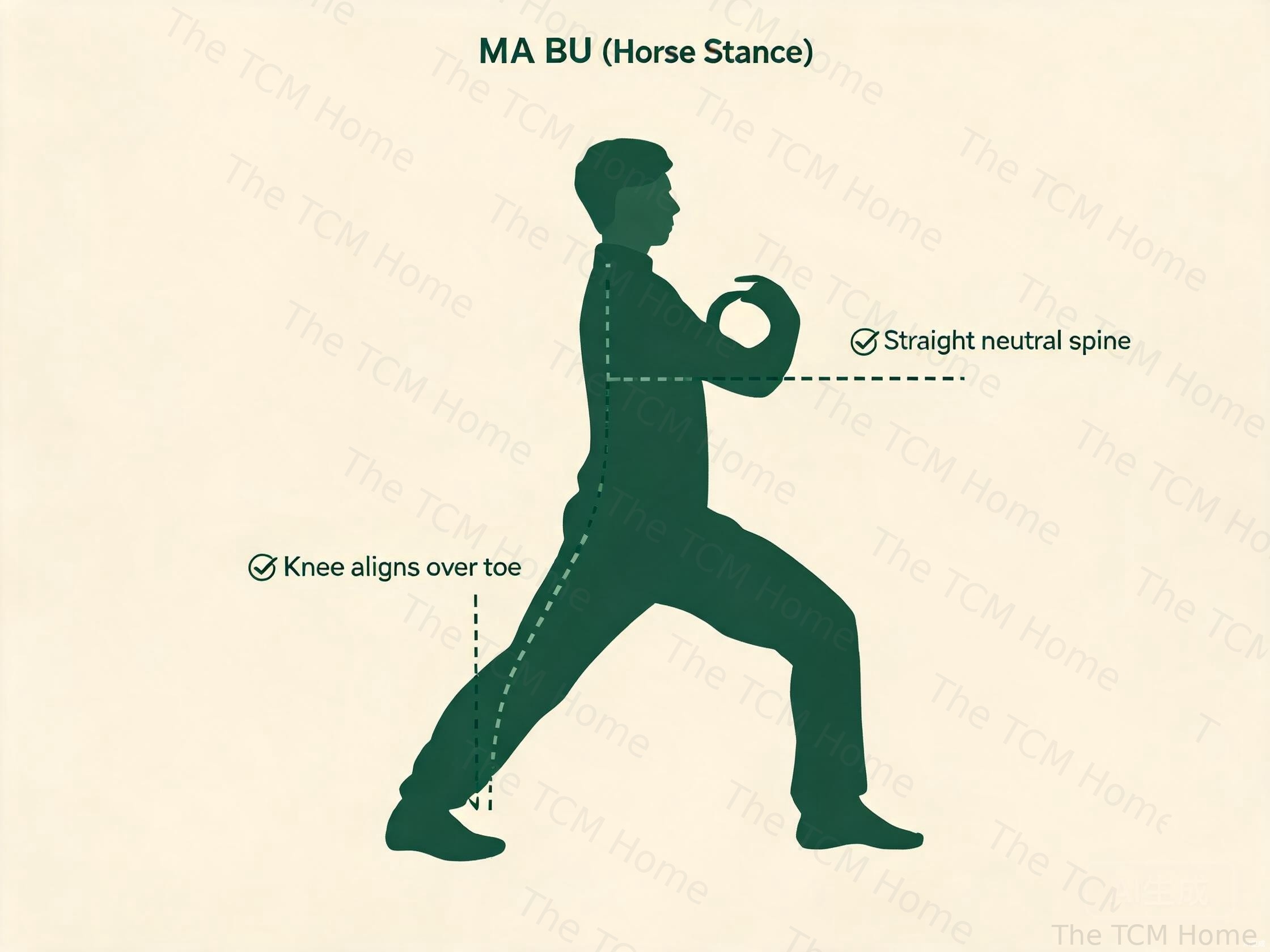
The slow, weight-shifting movements of tai chi take each joint through a comfortable range of motion without impact. As a joint moves, synovial fluid, the body's natural lubricant, is circulated across the cartilage surfaces, nourishing tissue that has no direct blood supply. Gentle muscular contraction around the joint pumps fluid in and out of the joint capsule, much like squeezing a sponge in water. Over weeks of practice, the surrounding muscles strengthen, providing better support and shock absorption for the joint.
From a Traditional Chinese Medicine perspective, arthritis falls under bi syndrome (impediment syndrome), in which pathogenic wind, cold, and damp invade the meridians and obstruct the flow of qi and blood. Where qi and blood stagnate, there is pain ("bu tong ze tong", "where there is no free flow, there is pain"). Tai chi, by promoting the smooth circulation of qi and blood through slow, continuous, circular movement and deep breathing, directly addresses this stagnation. The warmth generated by sustained gentle practice helps dispel cold and damp, while the relaxed, fluid motion disperses wind.
A 2021 Cochrane review and multiple randomized trials have found tai chi superior to standard care and comparable to physical therapy for knee osteoarthritis pain and function, with benefits lasting at least 52 weeks. The American College of Rheumatology's 2019 guidelines conditionally recommend tai chi for knee, hip, and hand osteoarthritis. Effects appear dose-dependent, with greater relief at 2 to 3 sessions per week.
The Safest Tai Chi Style for Arthritis: Sun-Style
Several major tai chi styles exist, Yang, Chen, Wu, Hao, and Sun, and not all are equally suited to arthritic joints. Chen style, with its explosive bursts of power and low stances, is generally too demanding. Even classical Yang style, with its deeper bow stances, can place significant load on compromised knees.
Sun-style tai chi, created by Sun Lu-tang in the early 20th century, is widely regarded as the most arthritis-friendly. Three features distinguish it:
- Higher stances: The legs remain relatively straight, dramatically reducing knee and hip load while still developing leg strength.
- Follow-step footwork: After stepping forward, the rear foot slides up to close the distance rather than remaining extended. This keeps the stance compact and weight shifts small, protecting joints from over-stride.
- Qigong integration: Sun-style weaves open-close qigong breathing into every transition, emphasizing internal energy cultivation over athletic performance.
The Tai Chi for Arthritis program, developed by Dr. Paul Lam, a family physician who himself has osteoarthritis, distills Sun-style into a short, accessible form. It is endorsed by arthritis foundations in Australia, the United States, and the United Kingdom and is the form most clinical studies use.
Warm-Up Sequence: Prepare the Joints
Before practicing any tai chi form, spend 5 to 8 minutes warming up. Cold joints are stiff joints, and the goal is to gently raise circulation to the synovial membranes before asking them to bear weight. Move slowly and never push into pain.
1. Neck Rotations
Stand with feet shoulder-width apart, knees soft. Slowly turn the head to look over the right shoulder, then left, 6 times each direction. Then tilt the right ear toward the right shoulder and left ear toward left shoulder, 6 times each. Keep the movements small if cervical arthritis is present; the goal is gentle mobility, not maximum range.
2. Shoulder Rolls
With arms relaxed at the sides, lift both shoulders toward the ears, roll them back and down in a circle, 8 times. Reverse direction, 8 times. This warms the shoulder joints and releases upper back tension that often accompanies arthritis-related guarding.
3. Wrist and Finger Waves
Extend the arms forward at chest height, palms down. Slowly flex the wrists so fingers point up, then point down, 10 times. Open and close the fists gently, 10 times. Hand osteoarthritis responds well to this gentle pumping of the small joints.
4. Hip Circles
Place hands on the hips. Slowly circle the pelvis clockwise, 6 times, then counterclockwise, 6 times. Keep the circles comfortable; this lubricates the hip joints and warms the lower back without loading the knees.
5. Ankle Rolls
Shift weight to the left leg. Lift the right foot slightly and rotate the ankle clockwise, 8 times, then counterclockwise, 8 times. Repeat on the left. Ankle mobility supports balance and reduces strain on the knees above.
5 Key Movements for Arthritis Relief
The following five movements form a complete, arthritis-safe routine. Each is drawn from or adapted to Sun-style principles: high stances, small weight shifts, and continuous breathing. Practice them in sequence, holding no stance lower than feels comfortable. If a movement causes sharp pain, reduce the range or skip it.
Movement 1: Commencement (Qi Shi)
This opening movement establishes breath, posture, and the mind-body connection. It gently mobilizes the shoulders and wrists.
- Stand with feet parallel, shoulder-width apart. Let the arms hang loosely at the sides, palms facing the body. Soften the knees so they are unlocked but not bent. Lengthen the spine as if a thread lifts the crown of the head.
- Bring the tongue to rest gently behind the upper front teeth. Breathe slowly through the nose, allowing the lower abdomen to expand on the inhale and retract on the exhale.
- Slowly raise both arms forward and upward, palms facing down, until they reach shoulder height. The arms feel as though they are lifting through water. Inhale through this phase, about 4 to 6 seconds.
- Turn the palms to face downward and slowly press the arms back to the sides, exhaling for 4 to 6 seconds. Feel the shoulders stay relaxed and dropped.
- Repeat 8 to 10 times. Keep the movement continuous, with no pause at the top or bottom.
Why it helps: The slow elevation and descent circulates synovial fluid through the shoulder and wrist joints without loading them, while the abdominal breathing begins to gather qi in the dantian.
Movement 2: Opening and Closing Hands (Kai He)
A signature Sun-style movement that opens the chest, mobilizes the elbows and wrists, and coordinates breath with motion.
- From the commencement position, bring both hands in front of the chest, palms facing each other about 20 cm apart, fingertips pointing upward. The elbows rest lightly against the ribs.
- Inhale and slowly separate the hands outward, palms still facing each other, until they are about 50 cm apart. Feel the chest broaden and the shoulder blades spread slightly.
- Exhale and slowly bring the hands back together to the starting 20 cm gap, feeling a gentle compression in the chest.
- Repeat 8 to 12 times. The movement is led by the breath, with the hands following.
Why it helps: The controlled opening and closing takes the elbows, wrists, and finger joints through their full comfortable range while the chest expansion improves breathing capacity, valuable for people whose arthritis limits rib mobility.
Movement 3: Parting the Wild Horse's Mane (Ye Ma Fen Zong)
This classic movement introduces weight shifting and waist rotation in a gentle, arthritis-safe format.
- Stand with feet shoulder-width apart, weight evenly distributed. Shift weight onto the right leg. Step the left foot forward about half a stride, heel touching first, with almost no weight on it (empty stance). Keep the stance high; the front knee should barely bend.
- As the foot steps forward, bring both arms in front of the chest as if holding a small ball, the right hand above at throat height, the left hand below at navel height, palms facing each other.
- Slowly transfer weight onto the left foot until about 70 percent rests on the front leg. As you shift, turn the waist gently to the right and part the arms: the right hand arcs up and to the right to about head height, palm facing up; the left hand presses down and to the left to hip height, palm facing down.
- Pause briefly, then reverse: shift weight back to the right leg, turn the waist to face forward, and bring the arms back to the ball-holding position.
- Repeat 6 times on the left, then step the right foot forward and repeat 6 times on the right.
Why it helps: The small, controlled weight shift builds leg strength without deep knee bending, while the waist rotation gently mobilizes the lumbar spine and hips. The asymmetrical arm movement takes each shoulder through a different, complementary range.
Movement 4: Cloud Hands (Yun Shou)
Perhaps the most arthritis-beneficial movement in all of tai chi, Cloud Hands combines continuous weight shifting, waist rotation, and flowing arm circles.
- Stand with feet wider than shoulder-width, toes pointed forward, knees soft. Raise both hands in front of the body at chest height, palms facing the body, the right hand slightly higher than the left.
- Shift weight slowly to the right leg. As you do, turn the waist to the right and let the right hand circle down and across to the left, while the left hand circles up and across to the right. The hands trace overlapping vertical ovals in front of the chest.
- As the weight fully reaches the right leg, step the left foot half a step to the left, placing it down with no weight on it.
- Shift weight onto the left leg, turning the waist to the left, and continue the hand circles so the right hand rises on the right and the left hand descends on the left.
- Continue shifting side to side, stepping the right foot to follow the left every other shift, moving slowly across the floor. The hands never stop circling.
- Practice for 1 to 2 minutes, breathing naturally, the inhale and exhale following the rhythm of the weight shift.
Why it helps: Cloud Hands mobilizes nearly every joint, shoulders, elbows, wrists, hips, knees, ankles, and spine, in a continuous, low-load way. The waist rotation directly addresses the spinal stiffness that often accompanies arthritis, and the lateral weight shift strengthens the hip abductors critical for knee alignment.
Movement 5: Closing Form (Shou Shi)
Every tai chi session ends with a closing form to settle the qi and bring the body back to stillness.
- Bring the feet together to shoulder-width apart, weight even. Let the arms hang at the sides.
- Slowly raise both hands, palms up, to chest height as you inhale.
- Turn the palms down and slowly press them to the lower abdomen (dantian) as you exhale, feeling the energy settle.
- Let the arms return to the sides. Stand quietly for 30 seconds, breathing naturally, feeling the warmth and relaxation in the body.
Why it helps: The closing form signals the nervous system to consolidate the practice, lowering heart rate and integrating the circulation benefits. In TCM terms, it returns gathered qi to the dantian for storage.
Learn to distinguish productive muscular effort from joint pain. A dull ache in the thighs is normal as legs strengthen. Sharp, localized pain in a joint, especially the knee, means you should reduce your stance height, shorten your stride, or stop. Tai chi should never be pushed through joint pain. Modify freely; the principles matter more than the exact shape.
Safety Tips for Practicing with Arthritis
- Practice on a non-slip surface with enough room to step in any direction. A flat floor is kindest to ankles and hips.
- Wear supportive, flexible-soled shoes unless your instructor and doctor confirm barefoot practice is appropriate. Cushioning reduces joint impact.
- Time practice for when joints are least stiff. Many people with rheumatoid arthritis find late morning or afternoon easier than early morning. For osteoarthritis, after a warm shower can be ideal.
- Keep stances high. A stance that leaves the knees comfortable is correct. Depth comes with strength, not forcing.
- Warm up every time. Even 5 minutes makes a measurable difference to joint comfort and injury risk.
- Stay hydrated. Synovial fluid is largely water; dehydration stiffens joints.
- Inform your instructor of which joints are affected so movements can be modified. A qualified Tai Chi for Arthritis instructor will know adaptations for hands, knees, hips, and spine.
A Simple Weekly Progression
For those beginning tai chi specifically for arthritis, a gradual progression prevents overuse and builds confidence:
- Weeks 1 to 2: Warm-up plus Commencement and Opening-Closing Hands, 10 minutes daily. Focus on breathing and posture.
- Weeks 3 to 4: Add Parting the Wild Horse's Mane, total 15 minutes daily.
- Weeks 5 to 6: Add Cloud Hands, total 20 minutes daily.
- Week 7 onward: Full 5-movement routine plus warm-up, 25 to 30 minutes daily, or split into two 15-minute sessions.
Most people report reduced stiffness within 4 to 6 weeks and meaningful pain relief by 8 to 12 weeks. Benefits continue to accumulate over months as leg strength and joint mobility improve.
Tai chi will not reverse the structural changes of arthritis, but it can meaningfully change how the joints feel and function. By combining gentle mobilization, strengthened support muscles, improved balance, and the calming of the nervous system that reduces the perception of pain, it addresses arthritis from multiple angles at once. Practiced patiently and consistently, it becomes not just a therapy but a sustainable, lifelong way of moving with, rather than against, an arthritic body.
Frequently Asked Questions
Is tai chi safe for people with arthritis?
Yes. Clinical guidelines from the American College of Rheumatology conditionally recommend tai chi for knee and hip osteoarthritis. The slow, low-impact movements gently mobilize joints without the pounding of walking or running. Sun-style tai chi, with its higher stances and follow-step footwork, is considered the safest form for arthritis. Always start with a qualified instructor who can modify movements, and avoid any posture that causes sharp joint pain.
How often should I practice tai chi for arthritis relief?
Most studies showing arthritis benefits used 2 to 3 supervised sessions per week of 40 to 60 minutes, plus home practice. For self-guided practice, aim for 20 to 30 minutes daily. Consistency matters more than duration, so a gentle 10-minute daily routine is far better than one long weekly session. Begin with shorter sessions and build gradually as joints become accustomed to the movement.
Which tai chi style is best for arthritis?
Sun-style tai chi is widely recommended for arthritis because of its higher, less demanding stances, its characteristic follow-step where the rear foot closes up to the front foot, and its emphasis on qigong breathing. The Tai Chi for Arthritis program developed by Dr. Paul Lam, a family physician with arthritis himself, is based on Sun-style movements and is endorsed by arthritis foundations worldwide.
Can tai chi replace my arthritis medication?
No. Tai chi is a complementary practice, not a replacement for prescribed medication. It can reduce pain, improve function, and enhance quality of life, and some people find they need less medication over time, but any changes to your medication should be made only in consultation with your rheumatologist or primary care physician. Think of tai chi as part of a broader self-care toolkit.
Educational content only. Not medical advice. This article is for educational and informational purposes only and is not a substitute for professional medical advice, diagnosis, or treatment. Always consult a qualified healthcare provider before beginning any new exercise program, especially if you have arthritis or another medical condition. Read our full disclaimer →