Key Takeaways
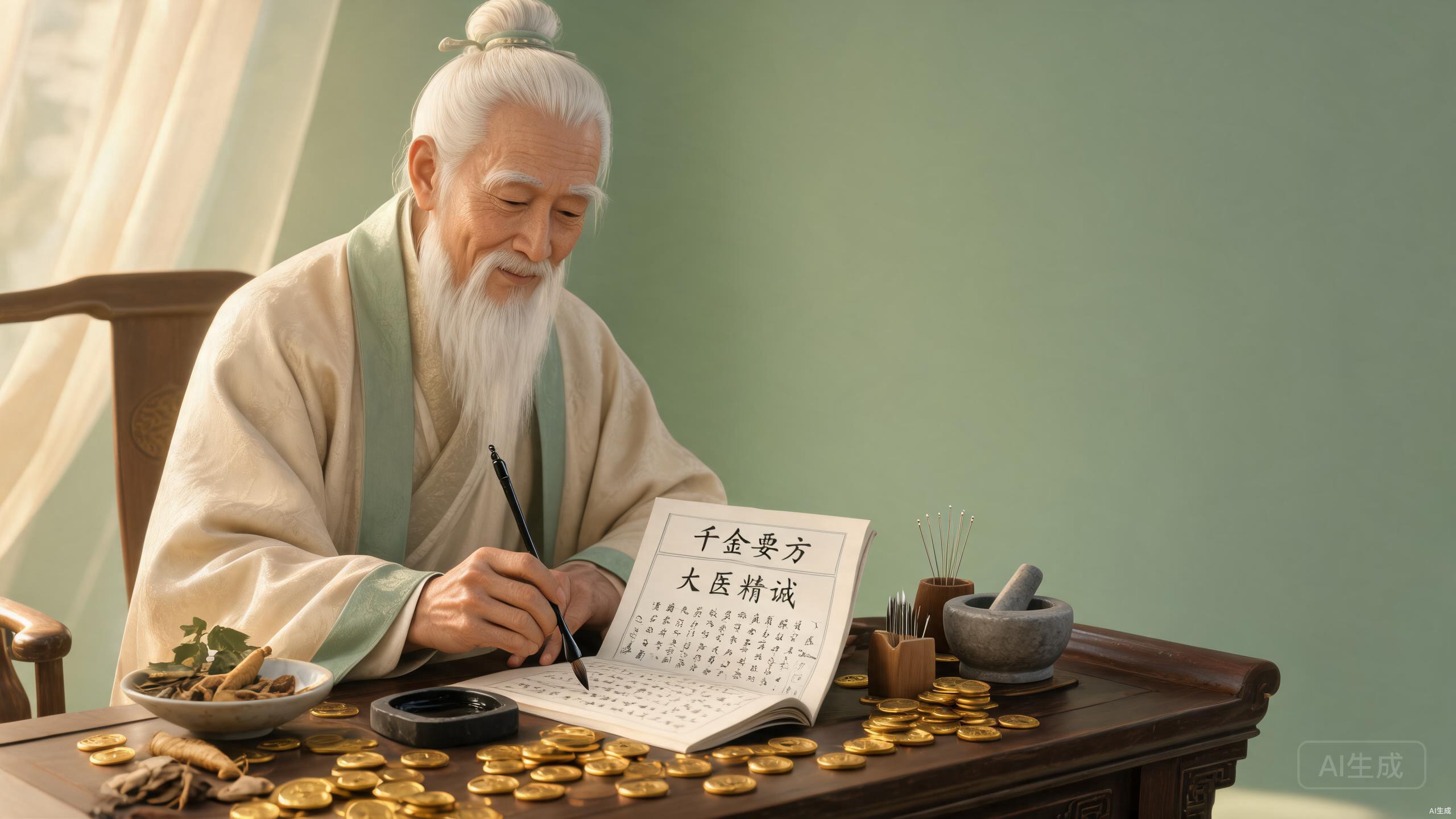
- The Qianjin Yaofang (千金要方, Thousand Golden Essential Prescriptions) was compiled by Sun Simiao (approximately 581-682 CE) during the Tang dynasty, earning him the title "King of Medicine" (Yao Wang, 药王).
- The work contains 30 volumes and approximately 5,300 prescriptions, covering clinical medicine, dietary therapy, acupuncture, women's and children's health, and emergency treatments.
- Its opening chapter, the Da Yi Jing Cheng (大医精诚, Sincerity and Devotion of the Great Physician), is the first systematic code of medical ethics in Chinese medicine, predating similar Western codes by centuries.
- Sun Simiao pioneered women's and children's medicine as distinct specialties, developed dietary therapy as a systematic discipline, and innovated acupoint selection methods including proportional measurement.
- The Qianjin Yaofang's emphasis on compassion, equality, and professional conduct remains relevant to modern medical ethics and continues to influence TCM practice today.
Historical Context: Tang Dynasty Medicine
The Qianjin Yaofang (千金要方), or Thousand Golden Essential Prescriptions, was compiled during the Tang dynasty (618-907 CE), a period often regarded as a golden age of Chinese civilization. The Tang dynasty was marked by unprecedented cultural, economic, and intellectual flourishing, with the imperial capital of Chang'an (modern Xi'an) serving as one of the largest and most cosmopolitan cities in the world. Medicine benefited from this environment of openness and exchange, as ideas, herbs, and medical practices flowed into China along the Silk Road from Central Asia, India, and the Middle East.
Against this backdrop, Sun Simiao (孙思邈, approximately 581-682 CE) emerged as one of the most accomplished and revered physicians in Chinese history. Born in Huayuan (modern Yaoxian County, Shaanxi Province), Sun Simiao was a child prodigy who reportedly memorized thousands of characters by age seven. However, he suffered from frequent illness in his youth, and the financial burden of his medical treatments nearly ruined his family. This personal experience of illness and the cost of healthcare profoundly shaped his later commitment to making medical knowledge accessible and to prioritizing patient welfare above all else.
Sun Simiao devoted his life to the study of medicine, Daoist philosophy, and the classical Chinese scholarly tradition. He reportedly declined several invitations to serve in the imperial court, preferring to live as a recluse on Mount Taihua and later in the mountains of Sichuan, where he could focus on medical practice and scholarship without political distraction. He was renowned not only for his medical skill but also for his personal integrity, his refusal to accept payment from poor patients, and his legendary longevity. He is believed to have lived to over 100 years of age, a feat that was attributed to his own adherence to the wellness principles he taught.
The Title: Why "Thousand Golden"?
The title of the work deserves explanation, as it reflects Sun Simiao's philosophy of medicine. In his preface, he wrote that human life is of incalculable value, more precious than a thousand pieces of gold. A prescription that can save a life is therefore worth more than any material treasure. The title Qianjin Yaofang — literally "prescriptions worth a thousand gold" — expresses the conviction that medical knowledge should be treasured, preserved, and shared, because it has the power to preserve something priceless: human life itself.
This philosophy also motivated Sun Simiao to compile his prescriptions in written form and make them available to others. In an era when medical knowledge was often jealously guarded as a family or professional secret, Sun Simiao's decision to document and disseminate his clinical experience was a radical act of generosity. He explicitly wrote that he compiled the work so that prescriptions would not be lost and so that families could have access to medical knowledge in times of need, particularly in rural areas where a physician might not be available.
Structure: 30 Volumes and 5,300 Prescriptions
The Qianjin Yaofang is a comprehensive medical encyclopedia organized into 30 volumes (juan) containing approximately 5,300 prescriptions. The work covers an extraordinary range of medical topics, reflecting Sun Simiao's belief that a physician must be knowledgeable in all areas of medicine. The volumes are organized as follows:
- Volume 1: Medical ethics and the practice of medicine (including the Da Yi Jing Cheng)
- Volumes 2-4: Women's medicine, including pregnancy, childbirth, and postpartum care
- Volumes 5: Children's medicine, including infant care and childhood diseases
- Volumes 6-7: Conditions of the seven sense organs (eyes, ears, nose, mouth, tongue, teeth, and throat)
- Volumes 8-14: Internal medicine, including wind stroke, cold damage, seasonal diseases, and organ-based conditions
- Volume 15: Spleen and stomach conditions
- Volumes 16-17: Lung conditions and cough
- Volume 18: Intestinal parasites and abdominal masses
- Volume 19: Urinary and kidney conditions
- Volume 20: Consumption and deficiency disorders
- Volume 21: Diabetes (xiao ke) and thirst disorders
- Volume 22: Skin conditions, swellings, and ulcers
- Volume 23: Emergency treatments and first aid for poisoning, trauma, and sudden illness
- Volume 24: Dietary therapy (shi liao), the medicinal use of foods
- Volume 25: Pulse diagnosis and examination methods
- Volume 26-28: Acupuncture and moxibustion, including point selection and needling techniques
- Volume 29-30: Formulas and contraindications, including incompatible combinations and preparation methods
Later in life, Sun Simiao compiled a companion work, the Qianjin Yifang (Thousand Golden Supplementary Prescriptions), which added another 30 volumes and approximately 2,000 additional prescriptions. Together, the two works represent one of the most comprehensive medical compilations of the pre-modern world.
Da Yi Jing Cheng: The First Code of Medical Ethics
Perhaps the most enduring contribution of the Qianjin Yaofang is the Da Yi Jing Cheng (大医精诚, "Sincerity and Devotion of the Great Physician"), which opens the first volume. This treatise is widely regarded as the first systematic code of medical ethics in Chinese medicine, and it predates similar Western ethical frameworks, such as the Hippocratic tradition's formalized codes, by centuries in the Chinese context. The Da Yi Jing Cheng establishes principles that remain foundational to medical ethics today.
Compassion and Equality
Sun Simiao wrote that a great physician must treat every patient with equal compassion, regardless of wealth, social status, age, beauty, race, or intelligence. He explicitly stated that a physician should not inquire whether a patient is noble or common, rich or poor, but should treat all as though they were his own closest family. This principle of equality in medical care was revolutionary in a highly stratified society where social status determined access to virtually everything, including healthcare.
Focus and Devotion
The text instructs physicians to maintain complete focus when examining and treating patients. A physician should not be distracted by worldly concerns, should not look around restlessly, and should not engage in casual conversation. When faced with a patient in pain or distress, the physician should respond as though the suffering were his own. Sun Simiao wrote that a physician who sees suffering without feeling compassion cannot be called a great physician.
Professional Conduct
Sun Simiao addressed the physician's professional demeanor in detail. He warned against boasting about one's skills, criticizing other physicians, or seeking to profit from patients' vulnerability. He advised physicians to be modest in dress and manner, to avoid seeking personal gain, and to prioritize the patient's welfare above all other considerations. He was particularly critical of physicians who exploited patients for financial gain, prescribing expensive treatments unnecessarily or prolonging treatment for profit.
Continuous Learning
The Da Yi Jing Cheng also emphasizes the importance of continuous study. Sun Simiao wrote that medicine is an exceedingly deep and complex art, and that a physician must read widely, study the classics, and never stop learning. He warned that physicians who rely on a single formula or a limited repertoire of treatments, without understanding the underlying principles, will inevitably fail their patients. This emphasis on lifelong learning and intellectual humility remains a cornerstone of professional medical ethics.
The principles articulated by Sun Simiao in the Da Yi Jing Cheng — compassion, equality, focus, professional integrity, and lifelong learning — are remarkably similar to those found in modern medical codes of ethics, including the Declaration of Geneva and the principles of patient-centered care. The fact that these principles were articulated over 1,400 years ago testifies to Sun Simiao's wisdom and to the universality of the ethical foundations of medicine.
Key Contributions to Clinical Medicine
Beyond medical ethics, the Qianjin Yaofang made numerous contributions to clinical practice that influenced the development of Chinese medicine for centuries.
Pioneering Women's and Children's Medicine
Sun Simiao was among the first physicians to systematically address women's medicine (fu ke) and children's medicine (er ke) as distinct specialties. In the Qianjin Yaofang, he devoted the second through fourth volumes specifically to women's health, covering menstruation, pregnancy, childbirth, postpartum care, and gynecological conditions. He argued that women's physiology differs from men's in important ways and that their conditions require specialized understanding and treatment. Similarly, the fifth volume was devoted entirely to children's medicine, covering infant care, feeding, childhood diseases, and developmental concerns. This systematic treatment of women's and children's health was groundbreaking and established the framework for these specialties in subsequent Chinese medical tradition.
Dietary Therapy as a Systematic Discipline
Sun Simiao is often credited with establishing dietary therapy (shi liao, 食疗) as a systematic medical discipline. Volume 24 of the Qianjin Yaofang is devoted entirely to the medicinal use of foods, documenting the therapeutic properties of grains, vegetables, fruits, meats, and other common foods. Sun Simiao argued that dietary therapy should be the first line of treatment, to be tried before herbal medicine or acupuncture. He wrote: "When a person is ill, the physician should first treat with food. If food does not cure, then medicine should be prescribed." This principle reflects the TCM concept that food and medicine share a common origin and that the most gentle, accessible interventions should be attempted before stronger ones.
His dietary therapy recommendations included specific food combinations for various conditions, seasonal eating guidelines, and instructions on food preparation to enhance therapeutic effects. Many of these recommendations remain relevant today and form the basis of modern TCM dietary therapy practice.
Innovations in Acupoint Selection
The Qianjin Yaofang made significant contributions to acupuncture and moxibustion. Sun Simiao introduced a proportional measurement system for locating acupuncture points, using the patient's own body measurements rather than fixed distances. This system, known as the "finger-cun" method, allows acupuncturists to locate points accurately on patients of different body sizes. He also systematized the selection of acupoint combinations for various conditions and documented the use of moxibustion for both treatment and prevention.
One of Sun Simiao's notable innovations was the identification of the "Ghost Points" (gui xue), a set of thirteen acupuncture points used for treating mental and emotional disorders, including conditions that were historically attributed to spirit possession. While the terminology reflects the understanding of his era, the clinical application of these points for psychological and neurological conditions demonstrates Sun Simiao's recognition of the connection between acupuncture and mental health.
Emergency Treatments and First Aid
Volume 23 of the Qianjin Yaofang is devoted to emergency treatments and first aid. Sun Simiao documented methods for resuscitation after drowning, treating poisoning (including from plants, minerals, and animal bites), managing traumatic injuries, and responding to sudden collapse. He was particularly interested in the treatment of goiter (neck swelling), which he correctly attributed to environmental factors including water quality, and he recommended the use of seaweed and animal thyroid as treatments. This observation, made over a thousand years before the discovery of iodine, represents one of the earliest documented treatments for thyroid conditions.
Diabetes (Xiao Ke) Recognition
Sun Simiao made important observations about xiao ke (消渴, "wasting and thirsting"), the TCM term for diabetes. He noted that the urine of patients with xiao ke was sweet, a observation that predates similar Western discoveries by approximately a thousand years. He also recognized that the condition was related to dietary factors, particularly excessive consumption of sweet and rich foods, and he recommended dietary management as the primary treatment. His clinical observations on the relationship between diet, urination patterns, and the progression of wasting-thirsting disorders were remarkably ahead of their time.
| Contribution | Description | Lasting Impact |
|---|---|---|
| Medical ethics (Da Yi Jing Cheng) | First systematic code of medical ethics in TCM | Foundational to TCM professional conduct today |
| Women's medicine | Systematic treatment of pregnancy, childbirth, and gynecology | Established fu ke as a distinct specialty |
| Children's medicine | Comprehensive treatment of infant and childhood conditions | Established er ke as a distinct specialty |
| Dietary therapy | Food as first-line treatment before herbs or acupuncture | Foundation of modern TCM food therapy |
| Acupoint measurement | Proportional finger-cun system for point location | Still used in acupuncture practice worldwide |
| Diabetes observation | Sweet urine and dietary causes of xiao ke | Predates Western discovery by ~1,000 years |
Influence on Later Medical Practice
The Qianjin Yaofang exerted enormous influence on the development of Chinese medicine after its compilation. It served as a standard clinical reference for physicians throughout the Tang, Song, Yuan, Ming, and Qing dynasties, and many of its prescriptions and clinical approaches were adopted into subsequent medical texts. The work's emphasis on medical ethics, in particular, shaped the professional identity of Chinese physicians for over a millennium.
The Qianjin Yaofang also influenced medicine beyond China's borders. It was transmitted to Japan, where it became an important reference for the development of Japanese traditional medicine (Kampo), and to Korea, where it influenced the compilation of Korean medical texts. The work's systematic organization and clinical comprehensiveness made it a model for medical compilation throughout East Asia.
Sun Simiao's legacy was also institutionalized in Chinese popular religion. He was eventually deified as the "King of Medicine" (Yao Wang), and temples dedicated to him were built throughout China. The mountain where he practiced, Mount Wutai near Yaoxian in Shaanxi, became a site of pilgrimage, and his birthday is still commemorated in some regions. This veneration reflects the deep respect that Chinese culture has accorded to physicians who exemplify both medical skill and moral virtue.
Modern Relevance of Sun Simiao's Medical Ethics
The ethical principles articulated in the Da Yi Jing Cheng remain strikingly relevant to contemporary medical practice. In an era when healthcare is increasingly commercialized, when access to medical care is often determined by wealth and insurance status, and when conflicts of interest between medical professionals and the pharmaceutical industry are a persistent concern, Sun Simiao's insistence on patient-centered care, professional integrity, and equality of treatment speaks directly to modern challenges.
Medical educators in China and increasingly in other countries continue to study the Da Yi Jing Cheng as part of professional ethics training. The text is frequently compared to the Hippocratic Oath, and scholars have noted both the similarities and the distinctively Chinese emphases of Sun Simiao's framework, particularly its integration of medical ethics with personal cultivation and philosophical values. The principle that a physician must cultivate not only technical skill but also moral character is one that resonates across cultural and historical boundaries.
For the general public, Sun Simiao's emphasis on dietary therapy and preventive care offers practical wisdom that can be applied to daily life. His recommendation to use food as the first line of treatment, to eat according to the seasons, and to attend to the connection between diet and health are principles that align with modern nutritional science and integrative medicine approaches. While the specific remedies and diagnostic frameworks of the Tang dynasty have been refined and supplemented by modern medicine, the underlying philosophy of gentle, preventive, patient-centered care remains as valuable today as it was 1,400 years ago.
Frequently Asked Questions
What is the Qianjin Yaofang?
The Qianjin Yaofang (Thousand Golden Essential Prescriptions) is a comprehensive medical text compiled by Sun Simiao during the Tang dynasty. It contains 30 volumes and approximately 5,300 prescriptions, covering clinical medicine, dietary therapy, acupuncture, women's and children's medicine, and emergency treatments. It is also famous for containing the Da Yi Jing Cheng, the first systematic code of medical ethics in Chinese medicine.
Who was Sun Simiao and why is he called the King of Medicine?
Sun Simiao (approximately 581-682 CE) was a Tang dynasty physician renowned for his medical skill, ethical conduct, and scholarly contributions. He is called the King of Medicine (Yao Wang) in recognition of his comprehensive medical knowledge, his pioneering work in medical ethics through the Da Yi Jing Cheng, and his clinical innovations in areas such as dietary therapy, women's and children's medicine, and emergency treatment. He reportedly lived over 100 years.
What is the Da Yi Jing Cheng and why is it important?
The Da Yi Jing Cheng (Sincerity and Devotion of the Great Physician) is a treatise on medical ethics written by Sun Simiao and included at the beginning of the Qianjin Yaofang. It is considered the first systematic code of medical ethics in Chinese medicine, predating similar formalized Western codes by centuries. It establishes principles of compassion, equality, focus, professional integrity, and lifelong learning that remain influential in TCM practice and medical ethics today.
What are the key contributions of the Qianjin Yaofang to medicine?
The Qianjin Yaofang made major contributions including the first systematic code of medical ethics (Da Yi Jing Cheng), pioneering work in women's and children's medicine as distinct specialties, innovations in dietary therapy as a first-line treatment, organized acupoint selection methods including the proportional finger-cun measurement system, early recognition of diabetes through sweet urine observation, and detailed emergency treatment protocols. Its 5,300 prescriptions served as a clinical reference for over a millennium.
This article is for educational and informational purposes only and is not a substitute for professional medical advice, diagnosis, or treatment. The historical information about the Qianjin Yaofang and its contents is presented for educational understanding of TCM history and classical medical practice. The prescriptions and treatments described in classical texts should not be self-administered. Herbal and dietary therapy requires professional qualification, accurate pattern identification, and consideration of individual constitution, current medications, and potential interactions. Always consult a qualified, licensed healthcare provider before beginning any herbal regimen or dietary therapy, especially if you are pregnant, nursing, taking medication, or have a medical condition. Read our full disclaimer →