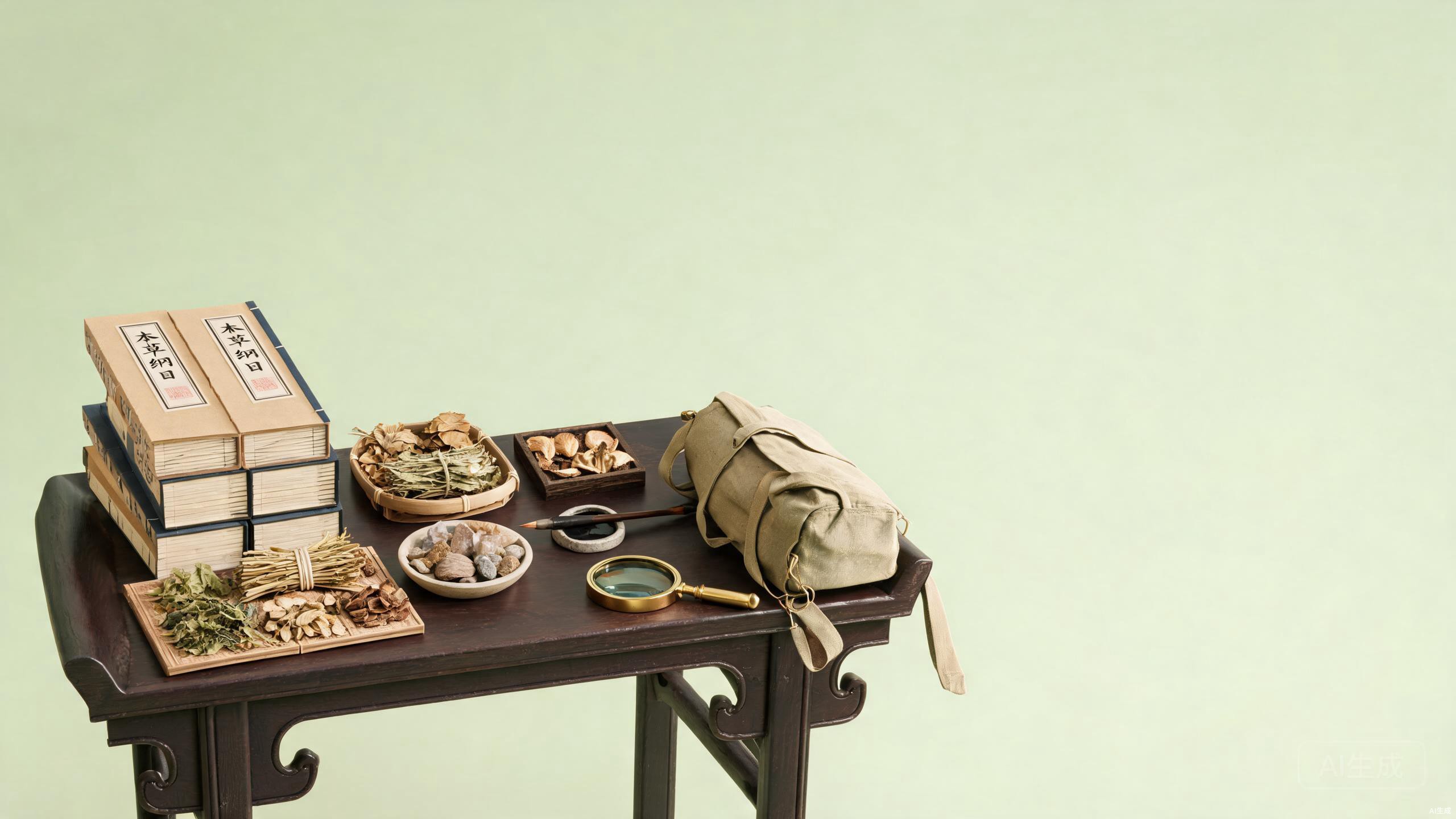
Key Takeaways
- The Bencao Gangmu (本草纲目, Compendium of Materia Medica) was compiled by Li Shizhen (1518-1593) over 27 years during the Ming dynasty and is considered the most comprehensive pharmacological work in the history of Chinese medicine.
- The work documents 1,892 medicinal substances across 52 volumes and 16 sections, accompanied by 11,096 prescriptions and over 1,000 illustrations, making it an encyclopedic achievement without parallel in its era.
- Li Shizhen introduced a groundbreaking natural classification system that organized substances hierarchically from minerals through plants to animals, predating similar taxonomic approaches in Europe by centuries.
- The compendium corrected hundreds of errors in earlier texts, combined pharmacological knowledge with clinical observation, and was translated into Latin, Japanese, Korean, French, and English, influencing medicine worldwide.
- Modern scientific research continues to validate many of Li Shizhen's pharmacological observations, and the Bencao Gangmu remains a living reference for TCM practitioners, pharmacologists, and historians of science today.
Historical Context: Ming Dynasty Medicine
The Bencao Gangmu (本草纲目), commonly translated as the Compendium of Materia Medica, was compiled during the Ming dynasty (1368-1644), a period of significant advancement in Chinese scholarship, commerce, and natural science. Its author, Li Shizhen (李时珍, 1518-1593), was born in Qizhou (modern Qichun County, Hubei Province) into a family of physicians. His grandfather had been an itinerant doctor, and his father, Li Yanwen, was a respected physician who served in the imperial medical academy. Despite this medical heritage, Li Shizhen's father initially encouraged him to pursue the civil service examinations, hoping his son would achieve official rank and escape the relatively low social status of physicians in imperial China.
Li Shizhen sat for the examinations three times but failed to advance beyond the provincial level. At the age of 23, he abandoned the examination path and devoted himself entirely to medicine, studying under his father while developing his own clinical practice. His reputation as a physician grew, and he was eventually appointed to a position in the imperial medical academy in Beijing. However, Li Shizhen's true passion was not court politics but the systematic study of medicinal substances. He was troubled by the inconsistencies, errors, and outdated information he found in existing bencao (materia medica) texts, which had accumulated over centuries without rigorous verification.
The most influential earlier text was the Zhenglei Bencao (Classified Materia Medica) from the Song dynasty, which Li Shizhen used as a foundation but found riddled with misidentifications, contradictory information, and superstitious claims. He resolved to compile a new, comprehensive, and critically verified compendium that would correct these errors and organize medicinal knowledge into a rational system. This decision would consume the next 27 years of his life, from approximately 1552 until 1578, and would produce one of the greatest works of natural science in world history.
Compilation Method: 27 Years of Devoted Scholarship
What sets the Bencao Gangmu apart from earlier pharmacological texts is the extraordinary rigor of Li Shizhen's research methodology. He did not merely compile and copy from existing texts. Instead, he engaged in extensive field research, traveling across multiple provinces to collect herb specimens, interview local healers, farmers, hunters, and fishermen, and personally observe plants and animals in their natural habitats. He climbed mountains to study alpine herbs, descended into valleys to examine aquatic plants, and visited markets to examine commercial drug samples.
Li Shizhen's approach combined textual scholarship with empirical observation. He read over 800 reference works, including medical texts, historical chronicles, philosophical writings, agricultural manuals, and literary works, extracting every mention of medicinal substances. When he encountered conflicting information, he sought to resolve discrepancies through direct observation and, where possible, self-experimentation. He is recorded as having personally tasted and tested many substances to verify their properties, effects, and toxicity, a practice that reflected the ancient Shennong tradition of tasting herbs to determine their nature.
The compilation was a family enterprise. Li Shizhen's sons and grandsons assisted in the work, helping with copying manuscripts, preparing illustrations, and reviewing drafts. The text was finally completed in 1578, but Li Shizhen spent additional years revising and refining the manuscript. He died in 1593, three years before the work was first printed in Nanjing in 1596, having never seen his magnum opus in published form. His son Li Jianyuan presented the completed work to the emperor, and it gradually became the standard pharmacological reference for the following four centuries.
Structure: 16 Sections, 52 Volumes, 1,892 Substances
The Bencao Gangmu is an encyclopedic work of staggering scope. It is organized into 52 volumes (juan) divided into 16 sections (bu), documenting 1,892 medicinal substances, of which 374 were newly added by Li Shizhen himself. The work also includes 11,096 prescriptions, over 1,000 illustrations, and more than one million Chinese characters of text. To put this in perspective, it is roughly equivalent in length to a major modern medical encyclopedia, produced by a single scholar and his family without the resources of an institution.
The 16 sections are organized into a natural hierarchy that represents one of Li Shizhen's most significant intellectual contributions. The sections are:
- Water (2 substances) — Various types of water used medicinally
- Fire (11 substances) — Heat sources and combustion products
- Earth (61 substances) — Soils, minerals, and mineral products
- Minerals and Metals (161 substances) — Ores, metals, gemstones, and processed minerals
- Herbs (615 substances) — The largest category, subdivided into mountain herbs, fragrant herbs, and others
- Grains (73 substances) — Cereals, legumes, and other cultivated food plants
- Vegetables (105 substances) — Cultivated and wild vegetable plants
- Trees (180 substances) — Woody plants, bark, resins, and fruits
- Fruits (127 substances) — Cultivated and wild fruits
- Angiosperms and Miscellaneous Plants (95 substances) — Plants not fitting other categories
- Insects (106 substances) — Insects and their products
- Scaly Creatures (94 substances) — Fish, reptiles, and aquatic animals with scales
- Shelled Creatures (45 substances) — Mollusks, crustaceans, and shelled animals
- Birds (77 substances) — Birds and their products
- Quadrupeds (83 substances) — Mammals and their products
- Humans (35 substances) — Substances derived from the human body (historical)
For each substance, Li Shizhen provided a systematic entry that included the substance's various names (including corrections of misidentifications), its source and habitat, methods of collection and preparation, its pharmacological properties (nature, flavor, and channel affinity), its therapeutic effects, clinical applications, and attached prescriptions. He also critically evaluated claims from earlier texts, discarding those he found unsupported by evidence and noting cases where information was contradictory or unverified.
Classification System Innovations
One of the most remarkable aspects of the Bencao Gangmu is Li Shizhen's classification system, which was centuries ahead of comparable European taxonomic approaches. Rather than organizing substances alphabetically or by therapeutic use (as was common in earlier texts), Li Shizhen arranged them according to a natural hierarchy based on their perceived level of complexity and organization in nature. Minerals and earth came first, followed by plants arranged from simple to complex, and finally animals arranged from lower forms (insects, fish) to higher forms (birds, mammals, humans).
This approach represented an early form of natural classification that recognized affinities between organisms. For example, Li Shizhen grouped related plants together based on shared morphological characteristics, and he placed humans at the apex of the animal kingdom, recognizing an implicit evolutionary hierarchy. Charles Darwin himself is reported to have consulted the Bencao Gangmu, and historians of science have noted the parallels between Li Shizhen's taxonomic thinking and the later binomial system developed by Carl Linnaeus in the 18th century.
Within each category, Li Shizhen further organized substances by their biological relationships. He distinguished between varieties of the same species, noted regional variations, and cross-referenced substances that were commonly confused or substituted. This level of systematic organization made the Bencao Gangmu far more useful as a practical reference than any of its predecessors and established a template that subsequent Chinese pharmacological works would follow.
Key Contributions to Pharmacology
The Bencao Gangmu made numerous enduring contributions to pharmacological knowledge. Among the most significant are the following:
Correction of errors in earlier texts. Li Shizhen systematically identified and corrected hundreds of misidentifications, factual errors, and superstitious claims that had been propagated in earlier materia medica. For example, he debunked the belief that certain minerals could confer immortality, noting instead their toxicity and the harm caused by their ingestion as elixirs. He also corrected misidentifications of plants that had led to dangerous prescribing errors.
Introduction of 374 new substances. Li Shizhen documented 374 substances that had not appeared in previous standard pharmacopoeias, drawing on folk knowledge, regional practices, and his own observations. These additions significantly expanded the pharmacological repertoire available to physicians and reflected his commitment to documenting all medicinal knowledge rather than only that found in elite medical texts.
Integration of pharmacology with clinical practice. Unlike some earlier texts that listed substances and their properties in isolation, the Bencao Gangmu attached thousands of prescriptions to the substances they contained, showing how each substance was actually used in clinical practice. This integration of pharmacological description with therapeutic application made the work both a materia medica and a practical clinical reference.
Documentation of preparation methods. Li Shizhen paid careful attention to how substances were processed and prepared, recognizing that the method of preparation could fundamentally alter a substance's pharmacological properties. He documented methods of drying, roasting, steaming, fermenting, and otherwise processing herbs, information that remains relevant to modern TCM pharmacy practice.
Dietary therapy and food medicine. The Bencao Gangmu extensively documented the medicinal properties of common foods, including grains, vegetables, fruits, and animal products. This reflected the TCM principle that food and medicine share a common origin (yao shi tong yuan), and the work's sections on grains, vegetables, and fruits remain valuable references for dietary therapy today.
Li Shizhen's insistence on verifying information through direct observation and his willingness to challenge authoritative sources make him a pioneer of what we would today call evidence-based practice. He explicitly rejected claims he could not verify, writing in his preface: "I have examined all previous works critically, retaining what is reliable and discarding what is not." This critical methodology sets the Bencao Gangmu apart as a work of science rather than mere compilation.
Global Influence and Translations
The influence of the Bencao Gangmu extended far beyond China's borders. As one of the most comprehensive scientific works of the pre-modern world, it attracted the attention of scholars, missionaries, and physicians in other countries. The work was eventually translated into multiple languages, spreading Chinese pharmacological knowledge across continents.
Japan: The Bencao Gangmu was introduced to Japan in the early 17th century and quickly became the standard reference for Japanese herbal medicine (Kampo). Japanese scholars produced annotated editions and commentaries, and the work profoundly influenced the development of Japanese pharmacology throughout the Edo period. The classification system introduced by Li Shizhen was adopted and further refined by Japanese naturalists.
Korea: The work was transmitted to Korea, where it influenced the compilation of Korean medical texts and became a standard reference for Korean traditional medicine. Korean scholars valued its systematic organization and comprehensive scope, and it contributed to the exchange of medical knowledge across East Asia.
Europe: European missionaries and merchants encountered the Bencao Gangmu in China and recognized its scientific significance. Portions of the work were translated into Latin in the 18th century, making it one of the first Chinese scientific texts to reach European audiences. The French sinologist and naturalist conducted partial translations into French in the 19th century, and these translations introduced European scientists to Chinese pharmacological knowledge and classification methods.
English and modern translations: In the 20th and 21st centuries, efforts were made to translate the complete Bencao Gangmu into English. Partial translations and scholarly studies have made the work accessible to Western researchers, and it is now studied by historians of science, ethnopharmacologists, and practitioners of integrative medicine worldwide. The work is recognized by UNESCO as part of the Memory of the World Register, acknowledging its significance to global cultural heritage.
Modern Research Validation
Modern scientific research has validated many of the pharmacological observations recorded in the Bencao Gangmu. The work's documentation of the properties, effects, and clinical applications of medicinal substances has served as a starting point for numerous pharmacological investigations, several of which have led to the development of important modern pharmaceuticals.
One of the most famous examples is artemisinin (qinghaosu), the antimalarial compound derived from Artemisia annua (huang hua hao, 黄花蒿). Li Shizhen documented the use of this herb for treating intermittent fever (a symptom of malaria) in the Bencao Gangmu, and his specific instruction to prepare the herb as a cold infusion rather than a decoction was crucial to the modern discovery of artemisinin. Tu Youyou, the Chinese pharmacologist who isolated artemisinin and received the 2015 Nobel Prize in Physiology or Medicine, credited the Bencao Gangmu and other classical texts as essential guides that directed her research.
Beyond artemisinin, modern research has investigated hundreds of substances documented in the Bencao Gangmu. Studies have confirmed anti-inflammatory, antimicrobial, antioxidant, and anticancer properties of numerous herbs first systematically described by Li Shizhen. The work also documented substances with potential toxicity, and modern toxicological studies have validated many of these observations, demonstrating that Li Shizhen's empirical approach yielded pharmacologically sound information.
However, modern researchers also note limitations. Some substances documented in the Bencao Gangmu, particularly certain mineral and animal products, have been found to be toxic or ineffective by modern standards, and some preparations described in the text carry risks that were not fully understood in Li Shizhen's time. This underscores the importance of using the Bencao Gangmu as a historical and research reference rather than a self-treatment guide, and of verifying its information through modern scientific methods.
| Aspect | Detail | Significance |
|---|---|---|
| Author | Li Shizhen (1518-1593) | Ming dynasty physician and pharmacologist |
| Compilation period | ~27 years (1552-1578) | Lifelong devotion to a single work |
| Total volumes | 52 | Encyclopedic scope across 16 sections |
| Substances documented | 1,892 (374 new) | Most comprehensive bencao of its era |
| Prescriptions included | 11,096 | Integration of pharmacology and clinical practice |
| Illustrations | Over 1,000 | Visual identification of substances |
| First publication | 1596 (posthumous) | Three years after Li Shizhen's death |
Li Shizhen's Legacy
Li Shizhen's legacy extends far beyond the Bencao Gangmu itself. He is revered in China as one of the greatest scientists in the nation's history, and his image has appeared on postage stamps, monuments, and educational materials. His former residence in Qichun has been preserved as a memorial site, and the Qichun region remains associated with the production of high-quality medicinal herbs.
More importantly, Li Shizhen's methodology continues to inspire practitioners and researchers. His commitment to field research, his critical evaluation of sources, and his integration of theoretical knowledge with practical observation represent an approach to natural science that remains relevant. In an era when the integration of traditional knowledge with modern scientific methods is increasingly valued, Li Shizhen's example demonstrates that systematic, evidence-based inquiry is not exclusively a modern Western phenomenon but has deep roots in Chinese scholarly tradition.
For students of TCM, the Bencao Gangmu serves as both a historical reference and a model of scholarly rigor. While modern pharmacopoeias and databases have superseded it as practical clinical references, the work remains essential reading for anyone seeking to understand the depth, sophistication, and empirical foundation of Chinese herbal medicine. It stands as a testament to what a single dedicated scholar, supported by family and driven by intellectual passion, can accomplish over a lifetime of devoted work.
Frequently Asked Questions
What is the Bencao Gangmu?
The Bencao Gangmu (Compendium of Materia Medica) is a monumental pharmacological encyclopedia compiled by Li Shizhen during the Ming dynasty. Completed after 27 years of work, it documents 1,892 medicinal substances across 52 volumes and includes 11,096 prescriptions. It is considered one of the most comprehensive and influential works in the history of Chinese herbal medicine and natural science.
Who was Li Shizhen and why is he important?
Li Shizhen (1518-1593) was a Ming dynasty physician, pharmacologist, and scholar who devoted 27 years of his life to compiling the Bencao Gangmu. He personally traveled to collect herb specimens, verified information through field research and clinical observation, and corrected errors in earlier texts. He is widely regarded as one of the greatest naturalists and pharmacologists in Chinese history, and his classification system was centuries ahead of comparable European approaches.
How is the Bencao Gangmu organized?
The Bencao Gangmu is organized into 16 sections and 52 volumes. Li Shizhen introduced a groundbreaking classification system that grouped substances into categories of minerals, plants, and animals, arranged in a hierarchy from lower to higher forms of life. Within each category, related substances are grouped together based on shared characteristics. This natural classification system is considered a major contribution to biological taxonomy.
Is the Bencao Gangmu still relevant today?
Yes. The Bencao Gangmu remains a foundational reference for TCM practitioners and herbal pharmacologists worldwide. Modern research continues to validate many of its pharmacological observations, most notably the use of Artemisia annua for malaria, which led to the Nobel Prize-winning discovery of artemisinin. The work has been translated into Latin, Japanese, Korean, French, and English, and is studied by historians of science as a landmark work in the history of natural science.
This article is for educational and informational purposes only and is not a substitute for professional medical advice, diagnosis, or treatment. The historical information about the Bencao Gangmu and its contents is presented for educational understanding of TCM history and pharmacology. The medicinal substances described in classical texts should not be self-prescribed. Herbal use requires professional qualification, accurate identification, and consideration of individual constitution, current medications, and potential herb-drug interactions. Always consult a qualified, licensed healthcare provider before beginning any herbal regimen, especially if you are pregnant, nursing, taking medication, or have a medical condition. Read our full disclaimer →